
by Athena Taylor
Introduction
In the early 1990s, a revolutionary wave of feminist punk rock, known as the Riot Grrrl movement began in Olympia Washington and eventually made its strides throughout the United States. Rooted in a fierce desire for equality, self-expression, and activism, Riot Grrrl was a powerful cultural and musical phenomenon that challenged the male-dominated punk scene. Tacoma, Washington, became a vital epicenter of Riot Grrrl energy, hosting electrifying concerts that fueled the movement’s fire and empowered a generation of women. This blog post delves into the Riot Grrrl movement’s core ideals, explores the interesting role of Tacoma in its evolution, and highlights some of the unforgettable concerts that reverberated through the city’s venues.
Riot Grrrl emerged as a feminist punk subculture, advocating for gender equality, sexual autonomy, and the dismantling of patriarchy. It sought to create a safe space for women within the punk rock scene, encouraging self-expression, activism, and the formation of female-centered bands. Bikini Kill, Bratmobile, and Heavens to Betsy were among the prominent Riot Grrrl bands that ignited a social and musical revolution.
The key players of these early female punk bands included talented and ambitious musicians such as Alison Wolfe, Kathleen Hanna, and Molly Neuman.
Tacoma’s role in the Riot Grrrl Movement
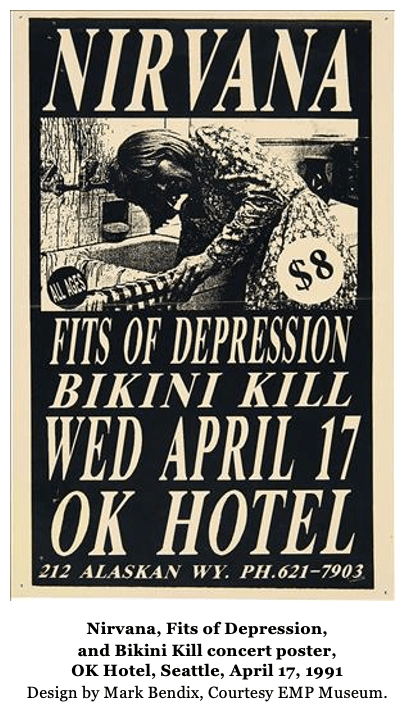
Although the Riot Grrrl movement originated in Olympia, Tacoma holds a part in boosting the Riot Grrrl movement as it provided venues and spaces, such as The Swiss and The Community World Theatre for concerts in the early stages of the movement. This would make sense as other prominent punk and grunge bands such as Nirvana were playing at similar spaces. In fact there is a poster bill in which both Nirvana and Bikini Kill are on when they both performed in Seattle together.In fact there are multiple occasions when Riot Grrrl bands came across Nirvana. For example, Allison Wolfe has even recalled a time in which she had an interaction with Kurt Cobain. In an interview she states “we jumped off stage and Kurt Cobain walked in right then and I walked up to him and said ‘You missed us!’ and handed him one of our fanzines.”
The Significance of Fanzines
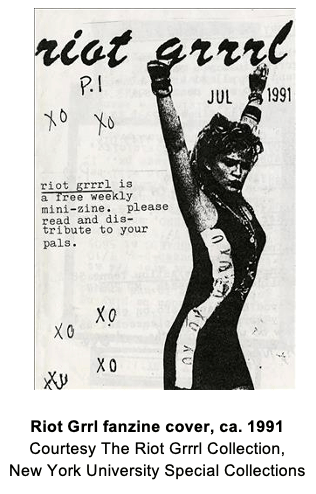
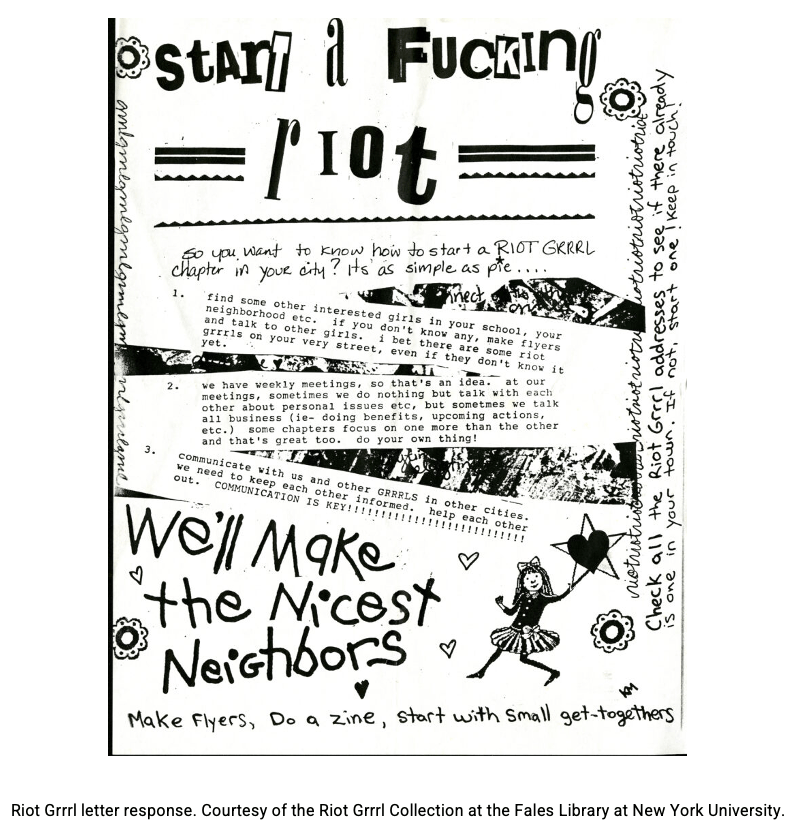
An integral part of the Riot Grrrl movement was the creation and circulation of fanzines. These self-published, do-it-yourself (DIY) magazines served as a vital medium for sharing ideas, experiences, and creative works. Riot Grrrl fanzines played a crucial role in connecting individuals within the movement, spreading the message of empowerment, and providing a platform for marginalized voices.
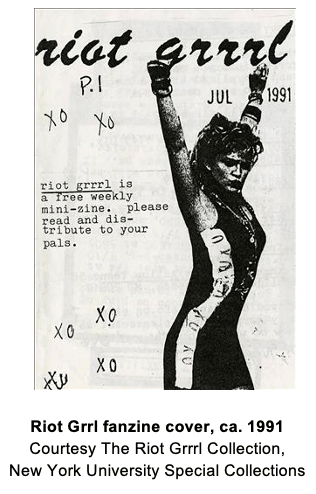
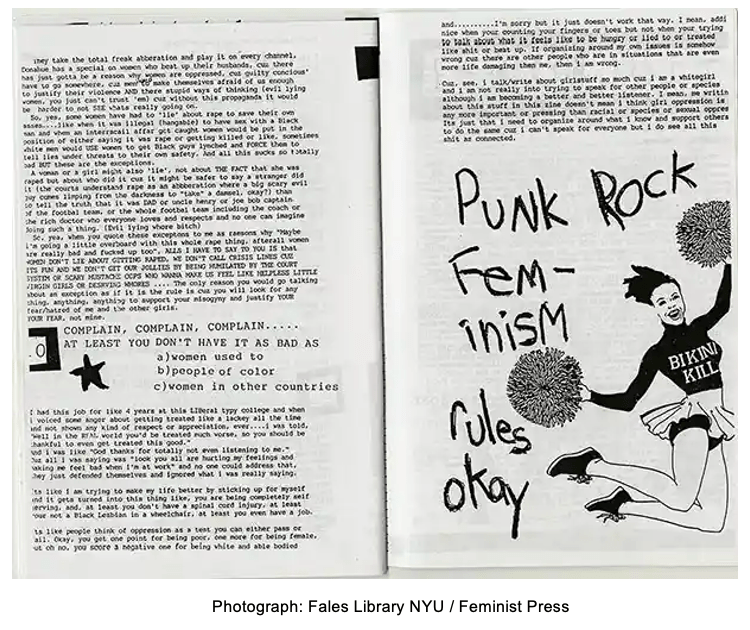
Riot Grrrl fanzines offered an alternative to mainstream media, which often overlooked or marginalized feminist perspectives. By producing their own publications, Riot Grrrls reclaimed their narratives and challenged societal norms. They covered a wide range of topics, including feminist theory, personal stories, political analysis, music reviews, and artwork. These publications fostered a sense of community, enabling individuals to express themselves authentically.
These fanzines played a crucial role in connecting individuals across different cities, states, and even countries. Through the exchange of fanzines, Riot Grrrls were able to share their ideas and experiences, inspiring and supporting one another. This network fostered a sense of unity and solidarity within the movement, creating a space where individuals felt seen, heard, and understood.
Fanzines served as a powerful tool for disseminating the core principles and activism of the Riot Grrrl movement. By distributing fanzines at concerts, record stores, and through mail-order, the movement’s ideas and music reached a wider audience, inspiring others to get involved and sparking conversations about feminism, gender, and social justice.
In conclusion, Riot Grrrl fanzines were a crucial component of the movement, amplifying marginalized voices, fostering connections, and challenging mainstream narratives. Through the DIY spirit of self-expression and alternative media, they played a significant role in shaping the cultural and ideological landscape of the Riot Grrrl movement.
The Influence of Riot Grrrl on the Present Day
As we look past the era of the Riot Grrrl movement, which had its end in the early 2000’s, it is quite obvious that it has left its mark. Especially here in the PNW there are many feminist punk bands that attribute their sounds and lyric base to legends of the Riot Grrrl movement.
Some of these bands include Chastity Belt, ChildBirth, and Who Is She, all of which thrive right here in Washington in the Tacoma/Seattle area. Chastity Belt is a band who, in particular, attributes their sounds to that of the Riot Grrrl scene. As stated in their description on Spotify, “Chastity Belt balanced smart, edgy music against lyrics that were often filled with goofball wit and feminist satire”.
Overall, there is still a vibrant and thriving scene filled with feminist punk music that keeps the energy of Riot Grrrl alive and thriving. Although the movement was short lived it has had a lasting impact on the present-day punk music being made.
Conclusion
Tacoma, Washington, stood as a vibrant hub for the Riot Grrrl movement, hosting concerts that exemplified the movement’s spirit. Through its powerful music and unwavering activism, Riot Grrrl energized the PNW city’s music scene and left an indelible mark on its cultural landscape. From intimate shows at The Swiss and inclusive concerts at The Community World Theater, Tacoma’s venues became stages for empowerment, fostering a sense of community, and sparking a revolution.
Bands like Bikini Kill , Bratmobile, and countless others brought their fierce and unapologetic messages to Tacoma, challenging societal norms and inspiring a generation of feminists and activists. These concerts were more than just music; they were transformative experiences that allowed marginalized voices to be heard, celebrated, and amplified. The Riot Grrrl movement was characterized by its DIY ethos, inclusivity, and a strong network of female musicians, fans, and activists.
The legacy of Tacoma’s Riot Grrrl scene continues to resonate today, inspiring subsequent waves of feminist punk and shaping conversations around gender, representation, and social justice in the music industry. The Riot Grrrl fanzines played a vital role in connecting individuals, spreading the movement’s ideas, and providing a platform for self-expression. Tacoma’s concerts and fanzines were pillars of empowerment, fostering a community that challenged the status quo, dismantled patriarchal norms, and empowered a generation of Riot Grrrls to embrace their voices and fight for equality. As we look back on the Riot Grrrl movement, we celebrate the powerful music, the fearless activism, and the enduring spirit of rebellion. The concerts that took place near and in Tacoma during that time were not merely events; they were catalysts for change, creating spaces where individuals could find solidarity, voice their frustrations, and pave the way for a more inclusive and equitable future.
About the Author
Athena Taylor prepared this article as her final project for TARTS 225: Musical History of Tacoma, at the University of Washington, Tacoma. At the time she took the class in Spring Quartet 2023, she was a senior majoring in Communications.
Further Reading
 Tacoma Music History
Leave a comment