

by Evan Hoang
Chances are, you’ve never heard the name Richard Cousins before, but millions of people have heard his bold, brazen bass lines from albums accompanying legends like Robert Cray, Eric Clapton, B.B. King, Van Morrison and John Lee Hooker. This 2 time Grammy-winning bassist was one of the founding members of the Robert Cray Band and still tours and records with the band today.
Born in the mid 1950s, Cousins’ impetus for getting into music was similar to that of many people of his generation: hearing the Beatles perform for the first time on the Ed Sullivan show on February 9, 1964 and wanting to be like them. He seemed to just gravitate towards the bass guitar in an “osmotic” manner, but it was not due to Paul McCartney. Cousins grew up in Tacoma, Washington which he used to call “the armpit of the Northwest.” However, growing up in the Lakewood area would produce a chance encounter with one of the best blues guitarists ever: Robert Cray. When Cousins was about 15 years old, he attended a jam session in American Lake Park -adjacent to Joint Base Lewis McChord. While playing bass to a Cream song, he noticed “amazing guitar playing” emanating from a geeky figure wielding a white Harmony guitar; they soon started playing together. After both Cray and Cousins graduated from Lakes High School, they started one of the first blues bands in the Seattle-Tacoma area: Foghorn Leghorn. Although this was a short-lived band, they developed their ‘musical chops’ at local venues like the Evergreen Ballroom in Olympia and the Last Chance Saloon in Tacoma.

Seeking broader opportunities and Cousins wanting to live closer to his girlfriend who lived in Oregon, the two best friends decided to take their talents southward to Eugene in 1974. Cray recalled having to hitchhike up to Salem -where their drummer lived- with Cousins to rehearse. Performing strictly blues at small-time bars, Cray and Cousins -as the Robert Cray Band- barely managed to eke out a living. However, another chance encounter happened: this time with blues great, Albert Collins -who also happened to perform at Cray’s high school graduation. Collins found himself without a backing band in Eugene the Robert Cray Band gladly filled in. The duo must have done a phenomenal job as they happily toured with Collins from 1976-1977 over 250 dates which helped elevate their status and gave them insight on how to tour properly. The band was able to tour at this time, with Cousins and Cray able to play at their home venue of the Back Forty Tavern in Lakewood, returning to their roots in 1978.

While playing in Eugene, especially on Monday Nights at the Eugene Hotel, the band often shared the stage with the Nighthawks -some of whom would later be absorbed into the Robert Cray Band; when they played together, they were known as the Crayhawks. One of these members included Curtis Salgado who played harmonica and sang for the Nighthawks. They befriended John Belushi who performed on Saturday Night Live regularly who later had Cray appear in Animal House, which was filmed in Eugene, playing Cousins’ bass guitar. Salgado and Cousins shared an apartment at the time; Belushi would often come over to their flat and listen to records. Salgado taught everything he knew about the blues to Belushi, which spurred Dan Akroyd and John Belushi to attend the Crayhawks’ shows to immerse themselves in the blues, in which they had the epiphany of the Blues Brothers for a SNL Skit. That skit blossomed into a movie grossing over 100 million dollars and produced an album that went platinum in the United States. The band and Salgado were acknowledged for their contributions to the Blues Brothers which garnered them further recognition for their musical prowess in 1980, which gave them the opportunity to open for bands like the Grateful Dead.

By 1983, the band released Bad Influence which has sold over 1 million copies to date. However at the initial time of release, “Cray and the boys were riding all over the country opening for John Lee Hooker and were so broke they had to take turns breathing,” according to their manager and songwriter at the time, Dennis Walker. Walker also explained that without “Richard’s singular vision and constant positive attitude, and he and Cray’s oak hard determination, a lot of us would be working over time plucking chickens just to pay the rent.” By this time, they had gained notoriety from Eric Clapton, Tina Turner, and Elvis Costello. In fact, the title track Bad Influence would later be covered on Clapton’s 1986 album, August. Despite earlier releases on smaller labels, this album set the stage for prominent commercial success.
Following the release of False Accusations in 1985 to some fanfare, the band’s 1986 album Strong Persuader captivated audiences which pushed it to the highest-charted blues album since 1963, reaching #13 on the Billboard 200 and went twice platinum in the United States and platinum in several other countries which prompted a tour in Europe, Japan, and the United States, with the band opening for Clapton in Birmingham, UK in 1986. The band now consisted of Cray, Cousins, keyboardist Peter Boe, and drummer David Olson. Further commercial success followed with the release of Don’t Be Afraid of the Dark in 1988 and Midnight Stroll in 1990. This commercial success allowed the band to indulge in some of the finer things, such as living in a $7,500 a month mansion in Bel-Air complete with a basketball court and swimming pool during the recording of the Don’t Be Afraid of the Dark album.
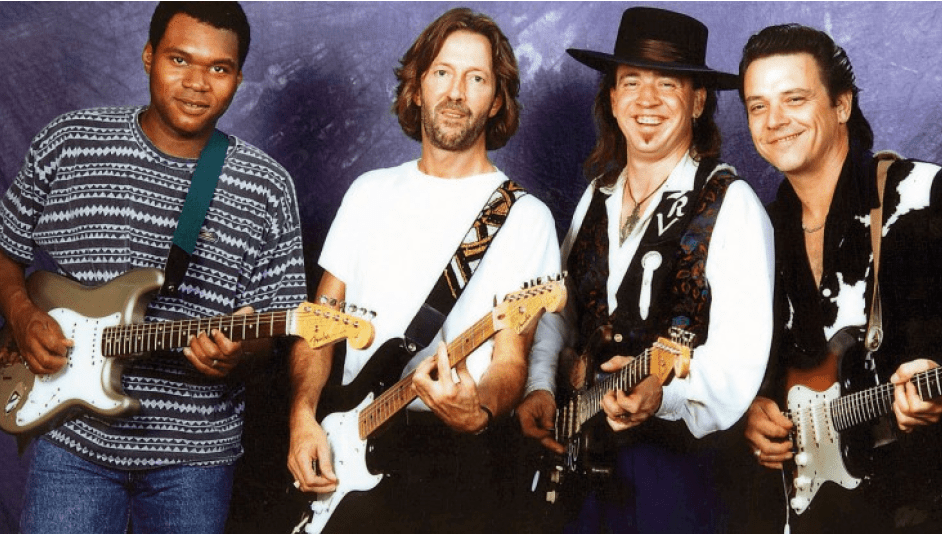
While on tour in 1989 at the Gorge Amphitheatre alongside other blues legends like Stevie Ray Vaughn and John Hiatt, Rick Nelson of the News Tribune described how Cousins was “superb all night, showing a rich, resonant touch that always found the right place between drummer Kevin Hayes’ beat and keyboardist Peter Boe’s and guitarist Tim Kaihatsu rhythmic accents.” Cousins’ stage presence today remains unparalleled, playing with dreadlocks and bare feet to accompany his laid back demeanor while still producing riveting bass lines. Cray and Cousins also played with Clapton’s ‘Blues Night’ bands during his Royal Albert Hall Residency in 1990, which would end up on the live album, 24 Nights. It’s miraculous that the duo met playing Clapton’s tunes from the band Cream and ended up playing together 20 years later. An album review from the News Tribune from November 26, 1991 states that much of 24 Nights is mediocre, besides “Have You Ever Loved a Woman” and “Worried Life Blues” due to the “presence of blues players Buddy Guy, Robert Cray, Johnnie Johnson and Richard Cousins.”
In 1991, Cousins departed the band but still remained the best of friends with Robert, moving to Zurich, Switzerland to explore other ventures, like touring with Etta James. Richard often saw the band while they were on tour with Europe and remained in contact with Robert often. Eventually, Cousins returned to the band in 2009, which seemed to reinvigorate passion in the band, returning to form. Cousins and Cray still often enjoy perusing mom and pop record stores while on tour, in search of LP’s that are unavailable online.
Cousins’ prolific career remains grounded as the Robert Cray Band recently played at the Federal Way Performing Arts & Events Center, paying homage to its Tacoma roots with Cray and Cousins as the only original members still currently in the band.
Further Reading
- Podcast Interview with Richard Cousins (1 Degree of Chunky B)
- Richard Cousins : MONUMENTAL
- President Obama’s Favourite Bluesman
About the Author
Evan Hoang prepared this article as his final project for TARTS 225: Musical History of Tacoma, taught by Kim Davenport at the University of Washington, Tacoma. At the time he took the class in Summer Quarter 2023, he was a junior majoring in biomedical sciences.
 Tacoma Music History
Leave a comment