
— by Jenn Anthony
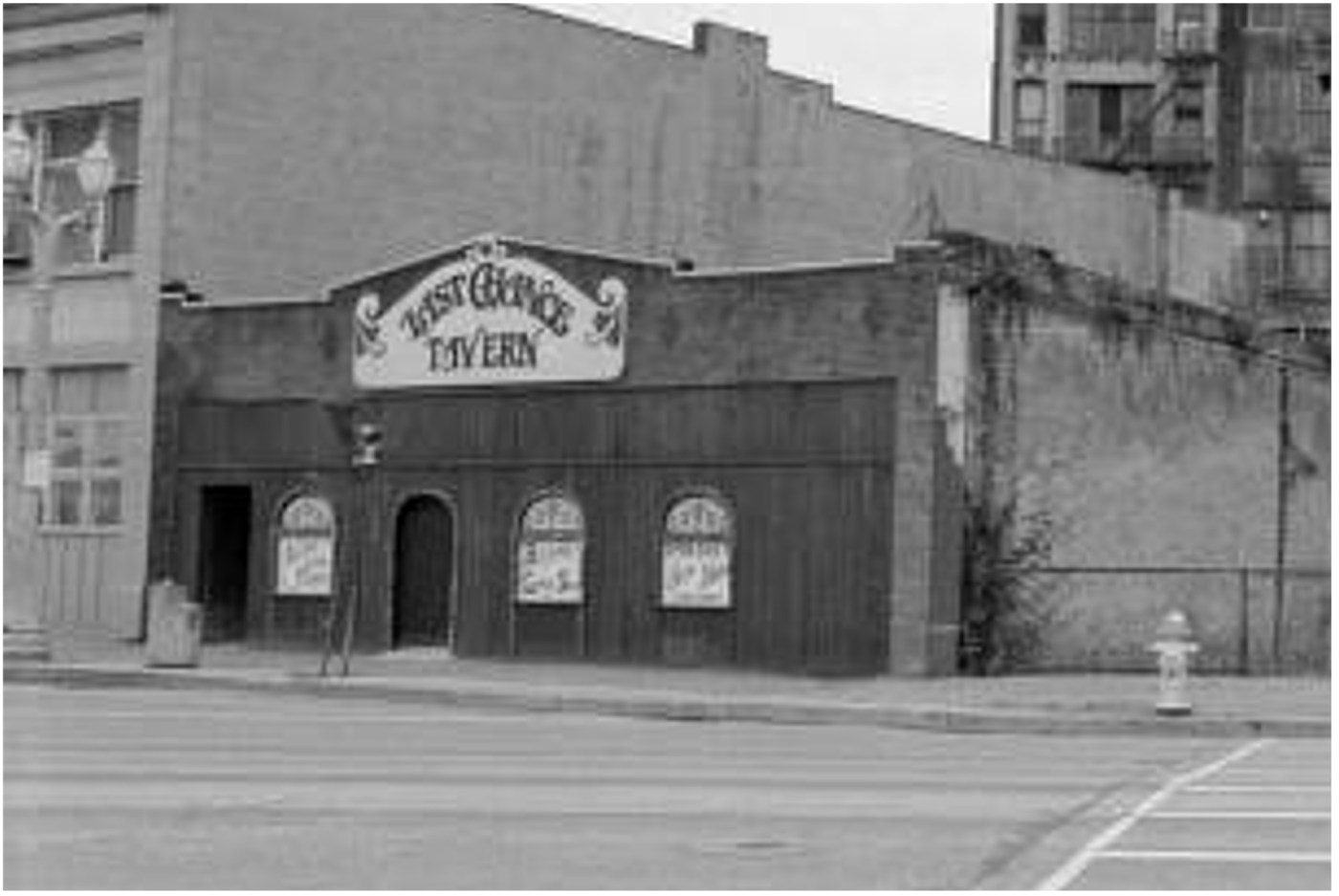
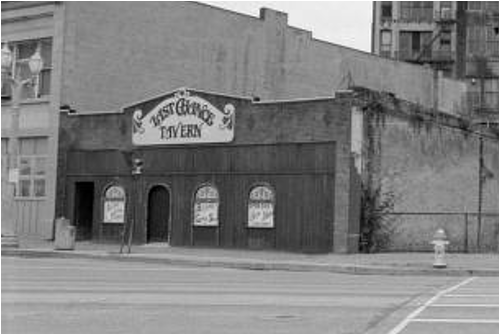
If you walk near Jefferson Avenue and 15th street today, there’s no sign that one of Tacoma’s most eclectic 1970s music spots once stood there. The Last Chance Tavern has disappeared from the city’s physical landscape and almost its collective memory. No neon sign survived. No building remains. Even the address floats in old records, though the most consistent listing places it at 1502 Jefferson Avenue. Before it became the Last Chance, the building had already lived several lives: in the 1940s it was Walt’s Tavern, in the 1950s it became Willis Tavern, and by the early 1970s it was operating under the name Last Chance. What changed was the cultural moment it stepped into. Tacoma was entering the era of the “head tavern,” a new kind of bar shaped by the long‑haired rock fans of the late 1960s.
A 1971 Tacoma News Tribune article described how these taverns were replacing the old Top‑40 bar model. Instead of customers demanding “Louie, Louie,” they wanted progressive rock, psychedelic improvisation, and original music. With the lack of adequate concert halls at the time, the UPS Fieldhouse and Tacoma Sports Arena being acoustically horrible for rock or rock concerts being frowned upon by administrators such as those of the PLU Olson Auditorium, bars like Scotty’s Mod Room and The Exit began booking these heavier bands, and the Last Chance fit naturally into this shift. It wasn’t trying to be a polished nightclub. It was part of a grassroots movement where musicians played what they wanted, and audiences came to listen rather than request radio hits. The Last Chance was exactly the kind of place the article described: a tavern where the long‑haired kids of the late 1960s had grown up, turned 21, and wanted live music that reflected who they were becoming.
The tavern operated during a difficult period for downtown Tacoma. The Tacoma Mall had pulled shoppers away, the Port economy was shifting, and buildings were aging faster than they were being repaired. The city had grit, the kind that came from boarded‑up storefronts and a nightlife scene built on dive bars and determination. In 1972, during the middle of that decline, two young men in their early 20’s, Otto Barcha and Michael Gomsrud, decided to take a chance on live music and purchase the tavern. I had the privilege of connecting with Michael who described those years as his “long‑haired, happy days,” a time when he and Otto simply believed Tacoma needed a place where local bands could play and where the beer was cold. The tavern held 176 people, standing room. It served salads and sandwiches, just enough to qualify for a beer license. No hard liquor. No fancy cocktails. Just beer, music, and a sense of belonging.
The interior of the tavern was a character of its own. Michael described gaudy floral carpet, huge red drapes, and a giant moose head that he had gotten from his father mounted over the front door, decorated for each holiday. A dance floor was made from reclaimed bowling‑alley planks, salvaged and installed by the owners themselves. And then there was the Wurlitzer peacock jukebox, glowing with color, waiting patiently for its turn to play between the live music. It was the kind of detail that sticks in memory: a splash of bubbling, neon elegance in an otherwise gritty room. Nothing about the place was polished. It was a DIY rock space built by two young men giving Tacoma a place to hear the live music it craved.
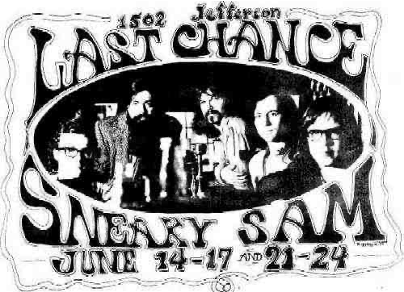
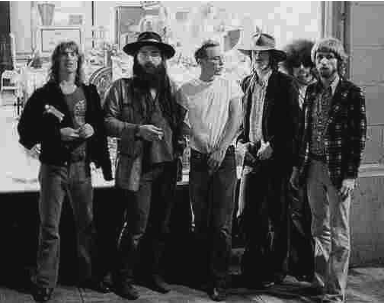
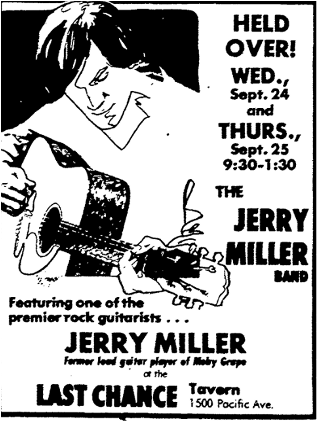
The first band to play The Last Chance was Sneaky Sam’s Lamb, a group formed by former member of The Wailers, Ron Gardner. That alone ties the tavern into Tacoma’s deep musical lineage. Other musicians followed, some local and some just passing through. Michael would drive up to Seattle’s bigger venues on occasion, find bands he liked, and invite them to Tacoma. “Bands liked us because it was more intimate,” he said. “Floor lights instead of overhead lights. They could see the crowd and the crowd could see them”. A notable performer was Jerry Miller of Moby Grape, who played there on September 25, 1975. Miller, widely regarded as one of the greatest guitarists of the psychedelic era, brought national‑level musicianship into a room small enough that people could see his fingers hit every chord. Another musician remembered fondly by patrons was David LaFlamme of It’s a Beautiful Day. Micheal has said this was his most memorable engagement and people still reminisce online about hearing Laflamme play “White Bird” on violin inside the tavern, the kind of performance that would have previously filled an arena in the band’s prime but felt private at the Last Chance. The tavern also hosted the Holy Modal Rounders in 1975, a band whose off‑kilter, psychedelic folk sound fit perfectly with the room’s scrappy, unpredictable energy. Countless local rock bands, as well as jazz musicians, blues bands, and others used the tavern as a steppingstone or a way to introduce themselves. The Last Chance wasn’t a major venue, but it was a place where musicians connected with audiences at eye level, literally and emotionally. Michael would often have these bands over to his recording studio in Spanaway, a way to preserve and pass the sounds along.
Another striking aspect of the tavern was its diverse crowd. The Last Chance wasn’t just a nighttime venue; it opened early and became a daytime gathering spot as well. Longshoremen from the union hall up the street would venture in after shifts on the Port. Downtown businessmen came by to play pool or foosball during their lunchbreak. Regulars drifted in for a beer, a sandwich, or just a familiar face. It was a place where people who might never cross paths elsewhere shared the same familiarity. On show nights, the tavern became a revolving door. People watched the first set, then wandered over to Bimbo’s Italian Restaurant during intermission for a stronger drink or a plate of pasta, before drifting back down Jefferson for the second set. The two venues merged in a way that only happens in a tight, walkable neighborhood. It wasn’t curated. It wasn’t exclusive. It was simply Tacoma: unpretentious, mixed, a little rough around the edges, and yet full of character.
Despite its loyal crowd, the tavern struggled financially. Tacoma’s economy was locked in stagflation, and people were choosing where to spend their money more carefully. It also didn’t help that Bimbo’s had something the Last Chance didn’t: a full liquor license and a more substantial menu. In the end, that mattered. “We just couldn’t continue to compete with their food and liquor,” Michael said. Bimbo’s single bar tenderer could procure more drink and food orders and make more revenue than The Last Chance’s two bartenders and three waitresses combined. By 1976, the tavern closed its doors.
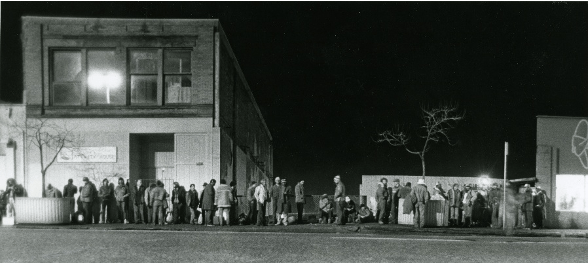
The building, however, did not disappear immediately. In 1982, it was converted into the Last Chance Shelter, a nighttime refuge for transient men and that could house up to 65 sleepers. For sixteen years, the same walls that once held rock shows and lunchtime crowds became a place of safety and warmth for people with nowhere else to go. The shelter remained in operation until 1998, when the building was finally demolished as part of downtown Tacoma’s redevelopment. With its demolition, the physical trace of the Last Chance Tavern vanished, leaving only a few photographs, a handful of scattered archival references, and some memories.
Researching a place like this is both rewarding and frustrating. Rewarding because every discovery feels like uncovering a hidden piece of Tacoma’s musical past and being able to connect with people like Michael Gomsrud, whose stories bring the tavern back to life, was an honor. Frustrating because so much depends on whatsomeone decades ago decided was worth saving.
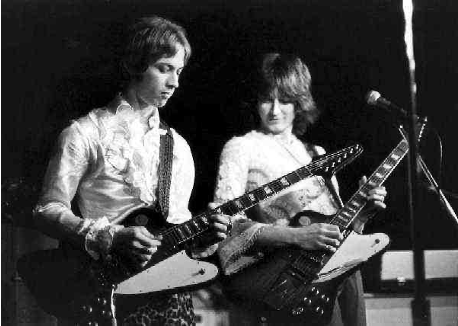
The Last Chance Tavern wasn’t a major venue. It didn’t host world tours or only chart‑topping acts. It didn’t last long. But it mattered. It mattered to the musicians who played there, the people who danced on those bowling‑alley planks, to those rock fans and owners who poured their youth into it. And it matters now because it’s part of Tacoma’s musical DNA. Tacoma’s music history isn’t just about the big names: The Wailers, The Pantages Theater, The Ventures, The Tacoma Dome. It’s also about the small rooms where local musicians learned, experimented, and connected. The Last Chance Tavern was one of those rooms. Thanks to a handful of photos, a few newspaper clippings, and the generosity of a former co‑owner willing to share his memories, its story can continue to be told.
About the Author
Jenn Anthony prepared this blog post as the final project for Musical History of Tacoma, taught by Professor Kim Davenport at the University of Washington Tacoma in Winter Quarter 2026; at the time, she was a senior majoring in Accounting.


Leave a comment