
— by Magdalene Seelhoff
Angsty, gritty, edgy, dirty, ugly—these are just a few words one might use to describe the grunge genre, yet all of them together couldn’t fully capture the quality of the grunge sound, which rebelliously eludes the limits of definition. Known for its punk rock, garage rock, and heavy metal influences, a raw and low-budget recording style, and often emotionally and psychologically troubled lyrics, the grunge genre is most commonly attributed to Seattle, with famous Seattle-based bands like Soundgarden, Alice in Chains, and Pearl Jam having a formative impact on its development. What people might not know is that the city of Tacoma’s underground music community was equally instrumental in cultivating the early grunge scene; in fact, the very beginnings of grunge can be traced all the way back to the music of The Sonics, a Tacoma-based rock band from the 60’s whose raw, screaming vocals and distorted guitar tones planted the first seeds of the grunge sound into the rock and roll world.
Another fact about the grunge genre, which might seem obvious to some and surprising to others, is that women have always played a part in its evolution. Whether because the grunge scene has been historically dominated by dudes, or because of restrictive cultural perceptions around gender norms, some folks may not immediately associate women with the dark, rough and unrestrained energy of grunge; yet Tacoma’s women of the early grunge scene prove that neither people nor music can be strictly defined, and despite the ways that their influence may fall into obscurity in the shadows of others, their influence still remains. In this article, I’ll be exploring the stories of women musicians in Tacoma’s local alternative music scene in the 80’s, who may not have received the same attention as their male counterparts, yet nonetheless created vast ripples in the grunge scene and played a defining role in shaping the genre as a whole.
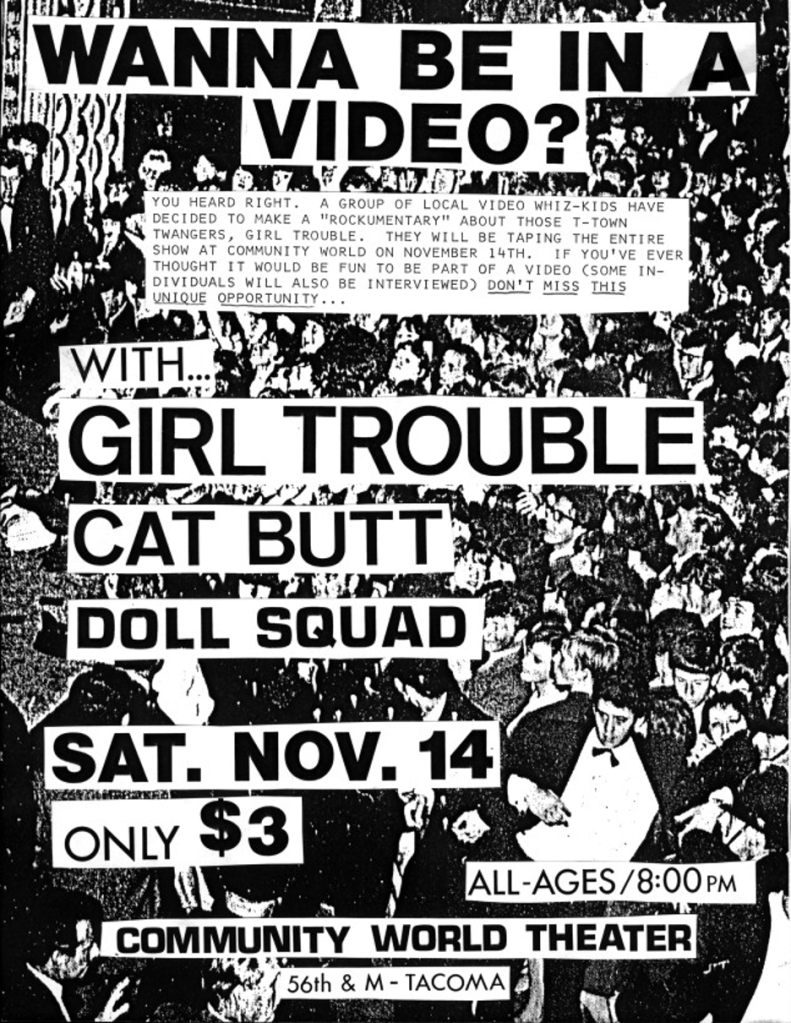
One of the earliest underground bands to have influenced the grunge genre was the all-female alternative rock band, Doll Squad. Though formed in Seattle, Doll Squad held multiple performances at the Community World Theatre, a live music venue in Tacoma which was active between 1987 and 1988, which allowed for a truly explosive spark of musical creativity in Tacoma during its brief lifespan. Hosting countless alt-punk bands, including critically acclaimed bands like Nirvana, indie pop band Beat Happening, and post-hardcore band Fugazi, the Community World Theatre was a truly thriving underground music venue, serving as a testament to Tacoma’s place at the center of the early grunge scene.
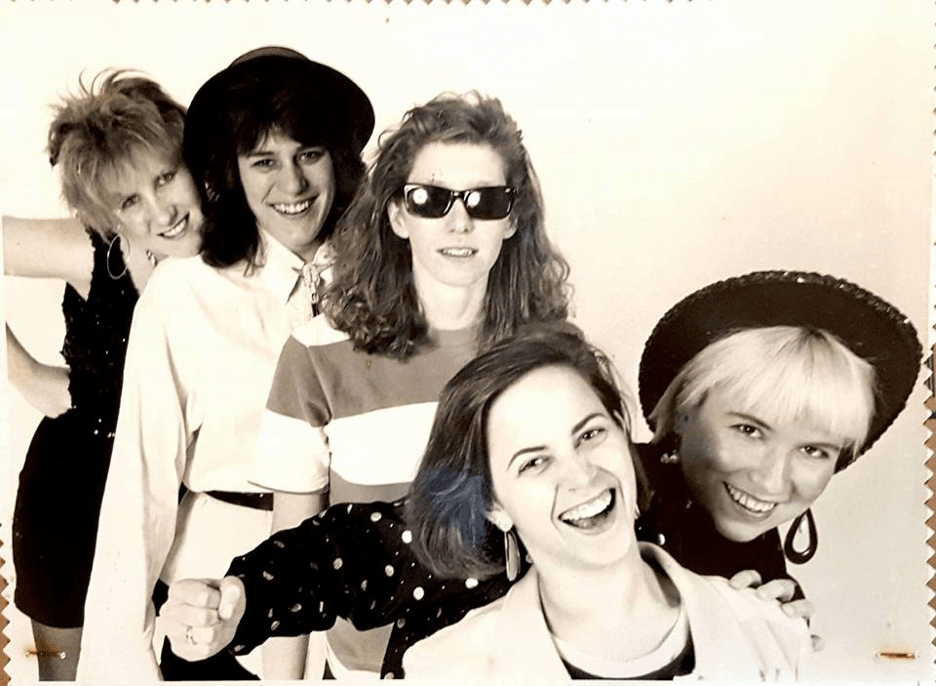
Though often overlooked, tending to blend into the background of more front-and-center vocals and guitar solos, a band’s drummer acts like the glue that holds the rest of the band together. Doll Squad’s drummer, Patty Schemel, would go on to become the drummer of the Los Angeles-based alternative rock band Hole in 1992. Alongside vocalist and guitarist Courtney Love’s unflinching exploration of themes of abuse, body image and sexual exploitation in her lyrics, the heavy, hard-hitting drummer describes how through the powerfully physical nature of the instrument, she was able to emotionally process overwhelming feelings of rage and anxiety, and escape the constraints of rigid gender roles. Through its aggressively cathartic lyrics, vocals and playing styles, Hole embodies the essence of grunge.
In a YouTube video titled “That Moment I Realized Women Can Be Rock Stars Too,” Schemel shares that as a child who grew up in Marysville, Washington, she had dreams about being in a rock band and performing in front of thousands of people; “but I never thought that would come true,” she said, “because girls didn’t become drummers in rock bands, especially girls from small rural towns in Washington.” At age 14, she had found a sense of belonging and freedom in the punk rock world. “The music was different,” she said. “It was loud and angry and faster and that’s how I felt. As a kid playin’ drums helped me with my anger and my anxiety which I had a lot of, about school or my parents or being gay. I put it all into the drums. Playing drums put me into my body and made it feel okay to be there.” Schemel’s way of grappling with her own rage and anxiety through the drums reflects a core element of the grunge genre, which originally pushed the boundaries of rock and roll in order to engage in an uninhibited and unfiltered confrontation with the bleaker aspects of society and the human psyche.
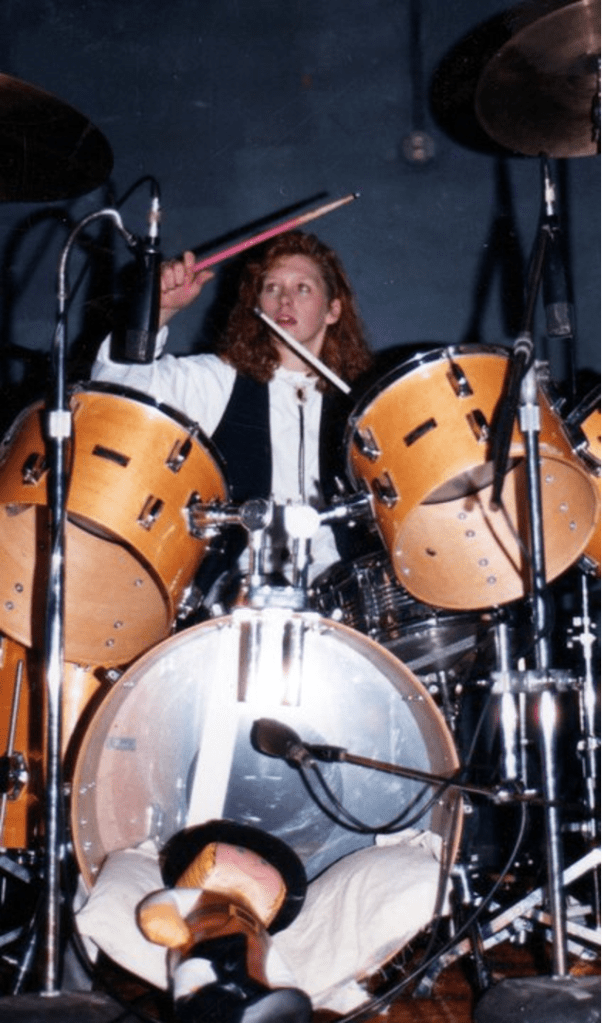
Along with Patty Schemel, Bon Von Wheelie is yet another prominent female drummer in Tacoma’s early grunge and punk rock community, with a more direct connection to Tacoma. As the drummer for the punk rock band Girl Trouble, Bon Von Wheelie was born in Tacoma and had immersed herself in Tacoma’s punk rock scene in the 80s. In 1983, she formed Girl Trouble with her brother and a school friend, holding practice sessions in the shed behind her parents’ house and playing a drumset she purchased for $70 at a Sears surplus store.
In a 2019 interview hosted by Tom Tom Mag, Von Wheelie discusses how her age and gender affected her experience as a musician in the punk and grunge scene. She describes that her age often shielded her against unsolicited forms of attention; “I think I’ve been in a unique position because I was always older than everybody else,” she explained. “That put me in a different category than probably some of the other female musicians playing at the same time. In other words, nobody thought of me (or at least not at that point) as “datable”. Cute girls in a band can sometimes bring extra tensions. I didn’t have that problem.” She went on to describe how she never felt discriminated against due to her gender, often feeling like musicians treated her like an equal. “In fact, probably some of those guys were scared of me because they couldn’t figure out what an old broad was doing playing drums in a band,” she said.
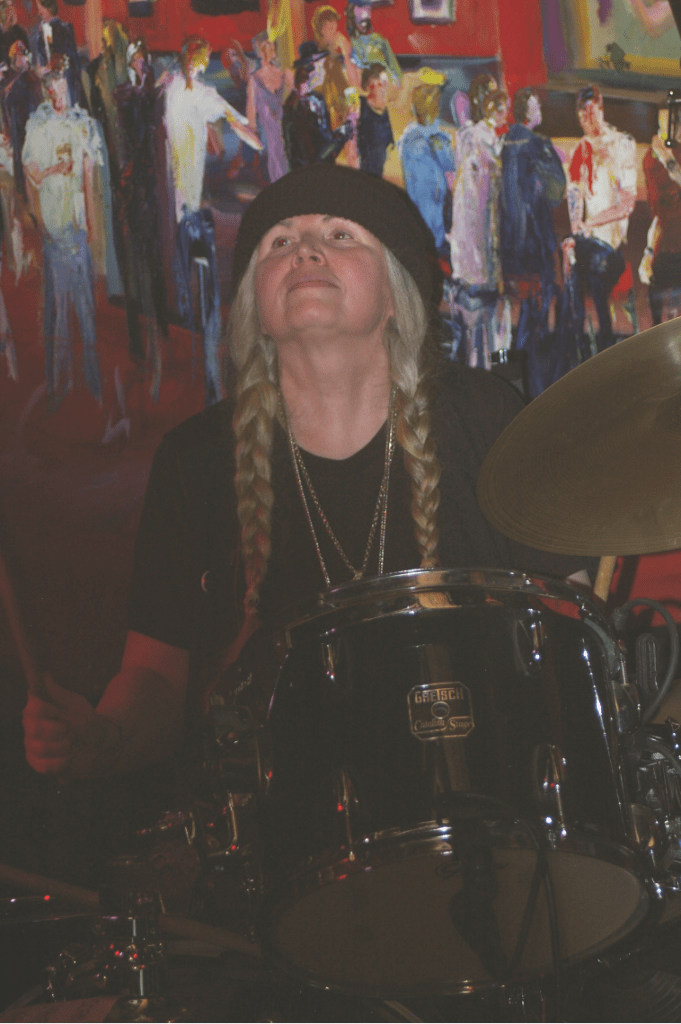
Alongside Girl Trouble and Doll Squad, the sludge metal and hardcore punk bands Melvins and Clown Alley performed numerous times at Tacoma’s Community World Theatre, each of which featured the bassist Lori Black, also known as “Lorax.” Following her role as the bassist for Clown Alley, Black would begin to play bass for the Melvins in 1987, thus taking part in some of the most influential bands in the history of Tacoma’s grunge era. Black was featured as the bassist for Melvin’s 1989 album Ozma, as well as their 1990 album Bullhead. Despite no longer being active as a musician, she indeed left an indelible impact on the history of Tacoma’s early grunge scene.
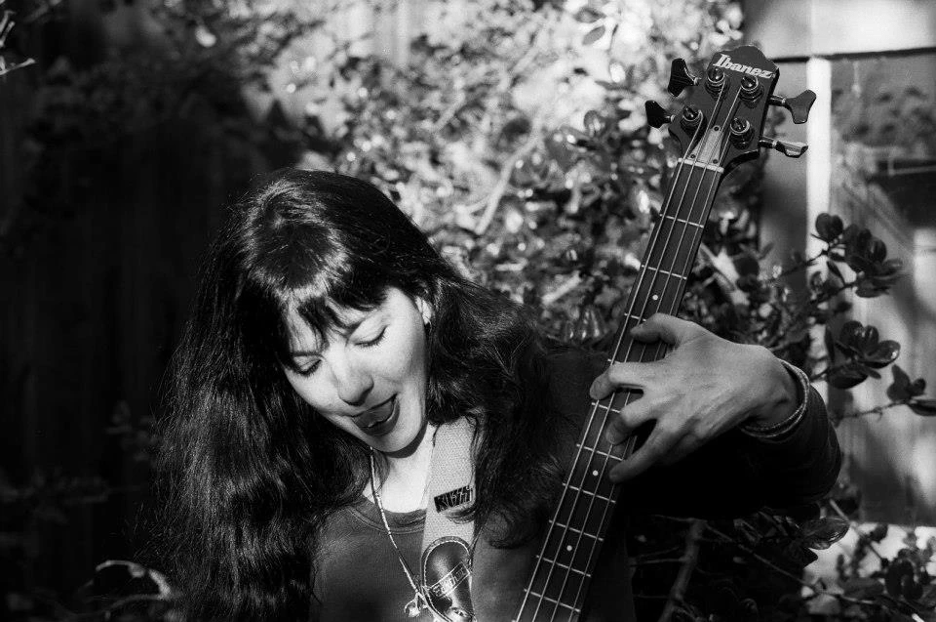
Lori Black, Bon Von Wheelie, and Patty Schemel were just a few of Tacoma’s women musicians who were active in the emerging grunge scene in the 80’s, but were they the only ones? Probably not. There’s no way to know for sure how many other women musicians were out there in Tacoma back then, who may not have gotten quite the same recognition as Hole, Girl Trouble, or the Melvins, but were behind the scenes, quietly leaving their mark on the development of the grunge genre all the same. These musicians demonstrate that despite the ways they may be overlooked by the likes of world famous bands like Nirvana, Tacoma’s women musicians have done equally revolutionary work in shaping the grunge genre from the time of its conception.
Grunge music has historically been a path to emotional liberation. It was one of the earliest Western genres to depict psychological and emotional struggles openly and unapologetically, reflecting a generation unafraid to confront their own rage, anxiety and trauma through art. Tacoma’s early grunge community made space for both men and women to face their demons and make uncomfortable, disturbing, emotionally honest art without shame. The women of Tacoma’s grunge scene in the 80’s act as role models to every little girl grappling with societal pressures around how she should look, think, feel or behave, reminding them that, much like the grunge genre itself, no one can be strictly defined; that yes, the world is sometimes cruel, and your pain is real, but you’re never alone; and that the truth of being human is to be messy, angry, ugly, lonely, and sad sometimes, and that’s okay—and hey, you could always make music about it.
About the Author
Magdalene Seelhoff prepared this blog post as the final project for Musical History of Tacoma, taught by Professor Kim Davenport at the University of Washington Tacoma in Winter Quarter 2026; at the time, she was a senior majoring in Interdisciplinary Arts & Sciences.


Leave a Reply