
— by Kailey Lawless
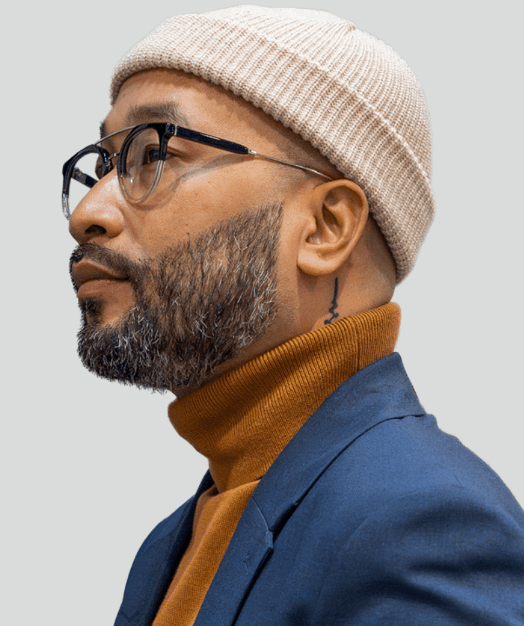
Tacoma’s music history is often associated with rock, jazz, and grunge, yet another vital part of the city’s cultural sound emerges from hip-hop and the voices of immigrant and refugee communities. One artist who represents this history is Silong Chhun, a Cambodian American artist, music producer, community storyteller, and advocate whose work emerged from Tacoma’s Eastside neighborhood of Salishan. Growing up in a refugee family navigating poverty, cultural transition, and strong community ties, Chhun has used music, media, and community engagement to document experiences of displacement, identity, and belonging within Tacoma’s Southeast Asian community.
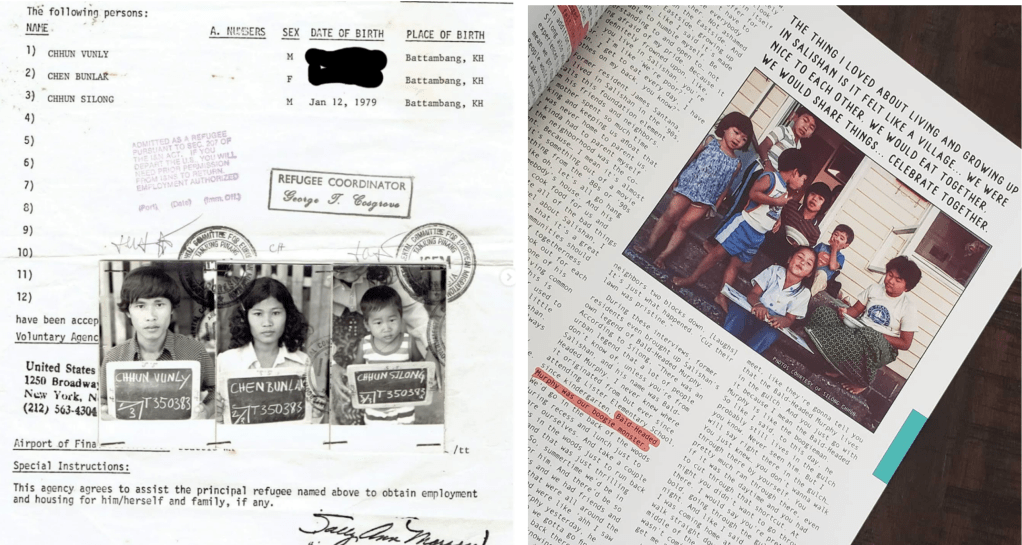
Chhun’s story begins long before his involvement in music. Born in Cambodia in 1979 shortly after the fall of the Khmer Rouge, he arrived in the United States as a refugee with his family in 1981. Like many Cambodian families resettled in the Pacific Northwest following genocide and forced migration, Tacoma became both a place of refuge and a space shaped by ongoing social and economic challenges. These early experiences profoundly influenced how Chhun understood storytelling, creativity, and community responsibility. On his personal website, Chhun explains that his parents’ stories of survival shaped his commitment to cultural storytelling.
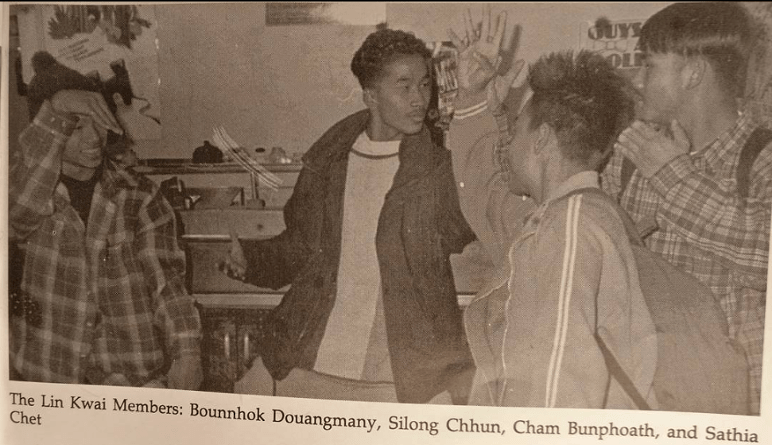
Before The 2nd Language, Chhun experimented across creative scenes. In a 2017 Instagram reflection, he recalled his early crew “Lin Kwai,” noting they skated and played ska and punk while also dreaming of becoming super rappers. These posts reveal a young artist moving between subcultures before finding his voice in hip-hop.
During the late 1990s and early 2000s, Chhun became deeply involved in Tacoma’s local hip-hop scene. He first collaborated with multicultural artists in a group called United Nations, reflecting the diversity of Tacoma’s Eastside, where Black, Samoan, Lao, and Cambodian youth were united through music and shared experience. He later co-founded The 2nd Language with Sathia Chet and Sam Tea, creating music that reflected the realities of Southeast Asian American youth coming of age while searching for identity, belonging, and purpose. As described in the PBS KBTC Profiles documentary on The 2nd Language, the group intentionally centered lived experience over commercial trends.
At a time when mainstream hip-hop increasingly emphasized commercial success, The 2nd Language centered storytelling grounded in lived experience within immigrant and refugee communities. Their music addressed themes of migration, racism, housing instability, policing, and identity formation among Cambodian American youth. Tracks from Language Arts function not only as artistic expression but also as documentation of community life and historical experience in Tacoma. If you want to hear the blend of boom bap production and Cambodian musical sampling for yourself, you can listen to Language Arts on SoundCloud.
I especially recommend listening to New Day Tomorrow on YouTube. In this track, Chhun contrasts stereotypical portrayals of Asian rappers with his own mission to “make a difference in the way that we livin’,” signaling a deliberate shift from imitation toward purposeful storytelling. The track then expands beyond local identity, referencing 1975 and a time when “citizens became slaves,” invoking the Khmer Rouge genocide and grounding contemporary Tacoma hip hop within global histories of displacement and trauma.
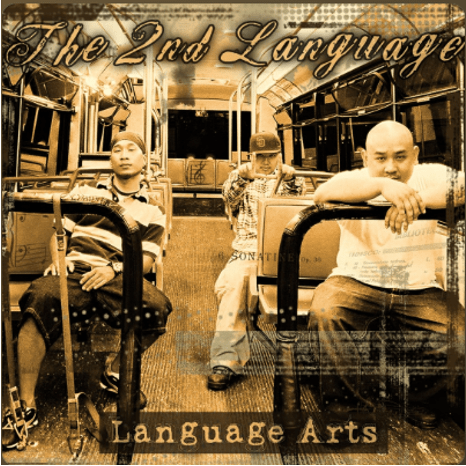
The group’s name reflects Chhun’s experience as an English language learner and his belief that music transcends spoken language. He explains that listeners can feel emotion and absorb energy even without fully understanding the lyrics, positioning music itself as a universal language that bridges cultural and linguistic divides. Chhun has described hip-hop as “the language of the unheard,” emphasizing its power as a platform for marginalized communities navigating identity and belonging in America, as stated in the PBS KBTC Profiles feature.
This philosophy was not only reflected in his lyrics but also in his production style. Influenced by Wu Tang Clan’s Enter the Wu Tang (36 Chambers) and producer RZA’s innovative sampling techniques, he began teaching himself music production using MIDI technology and keyboards. Rather than replicate traditional hip-hop sounds, he blended boom bap production with Cambodian musical samples from the 1950s and 1960s. By reworking older Cambodian recordings into contemporary beats, he connected refugee cultural memory with modern urban identity, shaping a distinctly Cambodian American hip-hop sound.
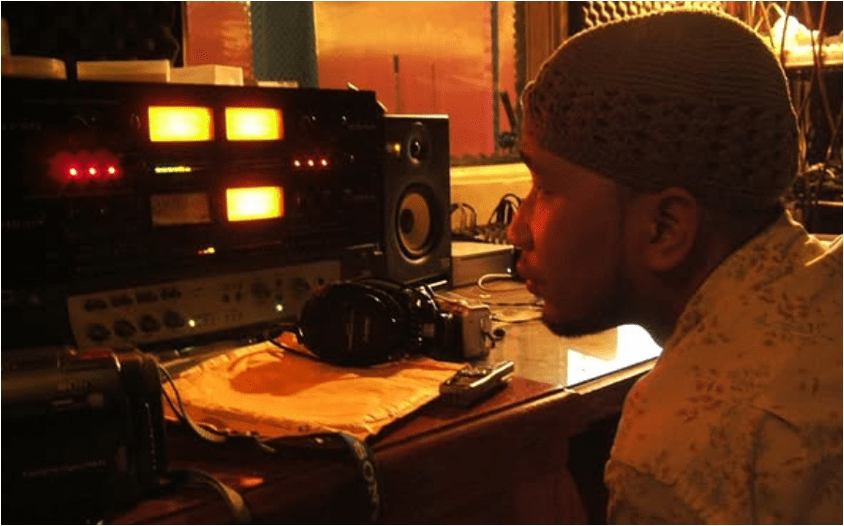
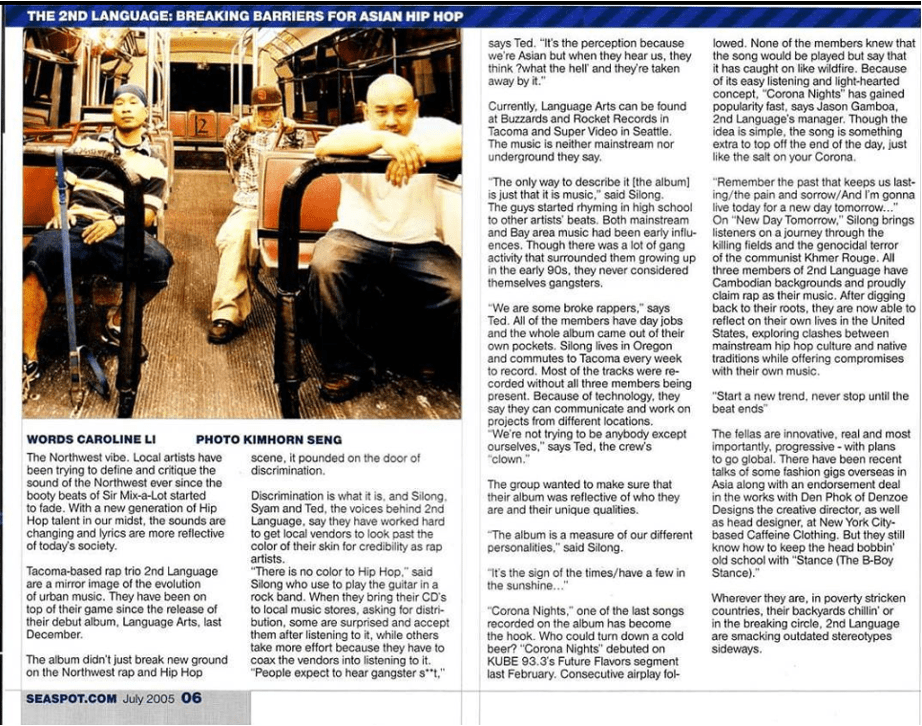
Social media reflections also document the group’s grassroots hustle. In a 2017 Instagram post, Chhun recalled performing before the era of social media and appearing on KUBE 93.3, describing it as “the best feeling” and noting their goal of breaking barriers for Asian hip-hop. This post demonstrates how The 2nd Language operated within local circuits while pushing against racial and cultural boundaries in the genre.
Chhun’s work extends beyond music alone. In an episode of the Nerd Farmer Podcast, he discusses the impact of immigration enforcement policies on Cambodian families and frames storytelling as a form of resistance and visibility. His creative work consistently connects art with civic engagement, demonstrating how musicians can function as educators, organizers, and advocates within their communities. More recently, community support for Chhun has demonstrated the lasting impact of his leadership. A 2025 Northwest Asian Weekly article described how refugee and immigrant communities rallied around him during his Tacoma City Council campaign, highlighting his role as both cultural figure and community advocate. The article traces his journey from growing up in Tacoma’s Salishan neighborhood to advocating for immigrant protection, tenant rights, and the closure of the Northwest Detention Center. These priorities reflect a continuation of the same community-centered values present in his artistic work. His campaign and the regional support surrounding it illustrate how his influence extends far beyond music into political engagement and intergenerational leadership.
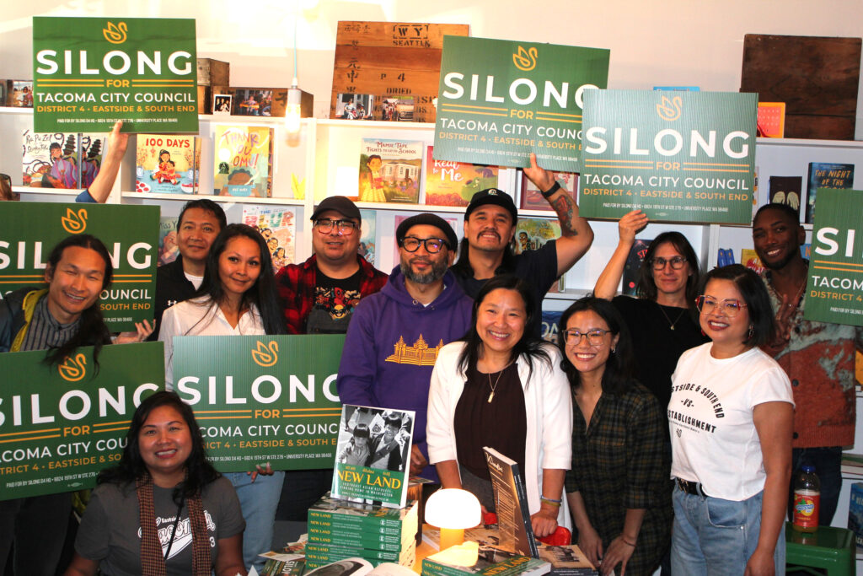
Alongside his advocacy and public leadership, Chhun has continued to expand storytelling beyond music through multimedia design and visual culture. In an interview with This Is Design School, he explains that his path into design began through his early interest in music and audio production before expanding into video and graphic design out of necessity. Teaching himself design software through experimentation and persistence, Chhun came to view music production and design as similar creative processes centered on composition and message. This philosophy later informed projects such as Red Scarf Revolution, a cultural platform that uses design to reconnect Cambodian youth with histories of genocide, migration, and identity that were often left unspoken within refugee families.
What makes Silong Chhun especially significant to Tacoma’s music history is how his work connects local experience to global history. The story of The 2nd Language is not only about hip-hop performance, but about refugee resilience, cultural survival, and the power of creative expression. Their music demonstrates that Tacoma’s soundscape has been shaped not only by nationally recognized genres, but also by immigrant and refugee communities whose lived experiences transformed the city’s cultural identity.
By telling stories rooted in migration, identity, and community struggle, Chhun expanded what Tacoma music represents. His work shows how hip hop can function simultaneously as oral history, activism, and cultural preservation. Through music and media, Silong Chhun and The 2nd Language created a lasting contribution to Tacoma’s cultural and musical legacy, reminding us that the history of Tacoma’s music is ultimately the history of the people who call the city home.
About the Author
Kailey Lawless prepared this blog post as the final project for Musical History of Tacoma, taught by Professor Kim Davenport at the University of Washington Tacoma in Winter Quarter 2026; at the time, she was a senior majoring in Social Welfare.


Leave a comment